04 / Description
StickDrift
A PS5-controller movement check disguised as games for long-term care.
- Three.js
- Gamepad API
- React
- FastAPI
- TimescaleDB
- PyTorch
Problem
Changes in how someone moves can show up years before a diagnosis, and long-term care staff have little time to notice them. StickDrift was our Hack the Valley 11 entry for PointClickCare's Catch It Early challenge: make the check feel like a game, not a clinic.
Approach
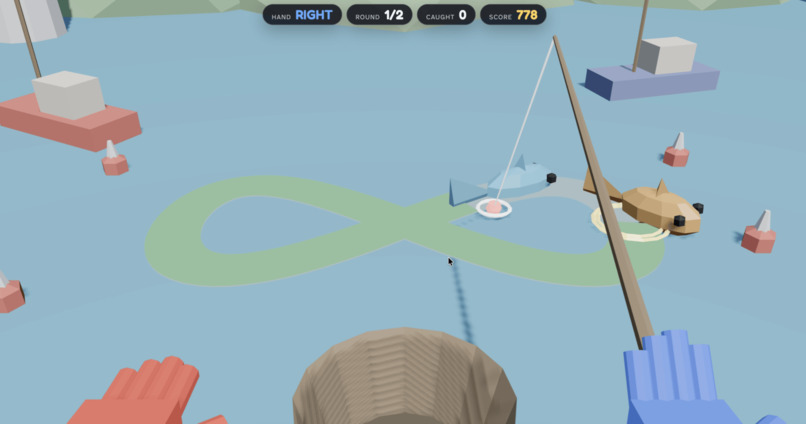
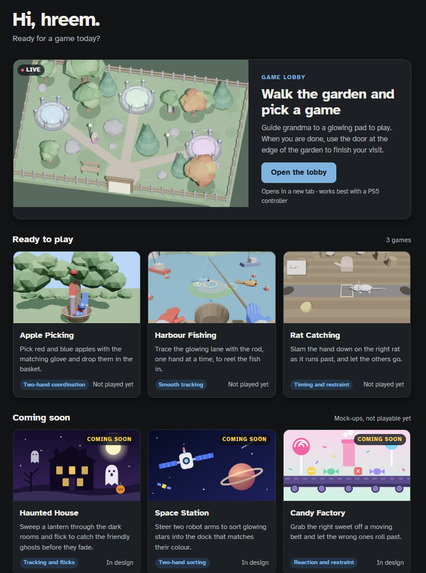
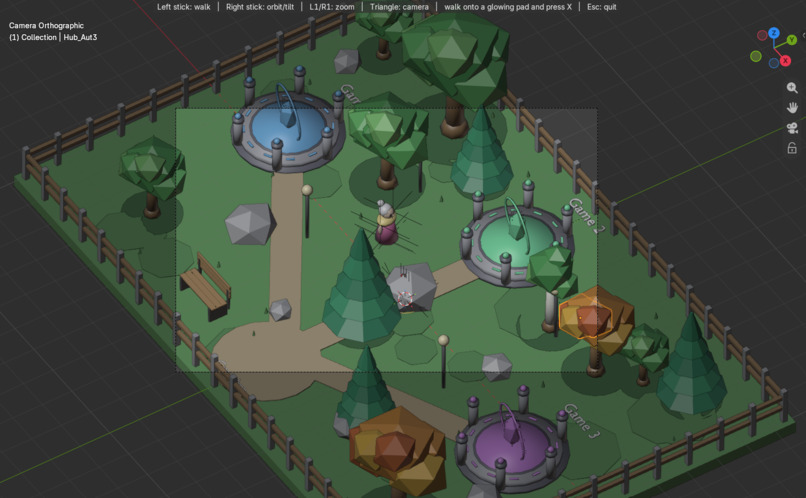
A resident logs in with a PS5 controller, walks a Three.js lobby, and plays Apple Picking, Harbour Fishing, or Rat Catching. The Gamepad API reads each stick. A separate measurement layer records reaction time, path error, and tremor, while the resident only sees scores and stars.
Staff get a live view about a tenth of a second behind, a badge (No concerns, Keep an eye on, or Check soon), and plain-language visit cards. A small PyTorch model scores resemblance to three movement patterns. Gemini answers questions only from that resident's recorded numbers, and a PDF report is one click away. FastAPI and TimescaleDB are the only thing the two laptops share.
Built with Bryan Wei, Hreem Pandya, and Ayan Saiyed. StickDrift does not diagnose. It flags a change, and a nurse decides what happens next.
Result
Residents play three short games. Staff see trends across visits and a clinician report, without the resident ever looking at a health number.